Two Plates from Szentgotthárd
I found these plates in an antique shop in Szentgotthárd, a small Hungarian town almost touching the Austrian border.
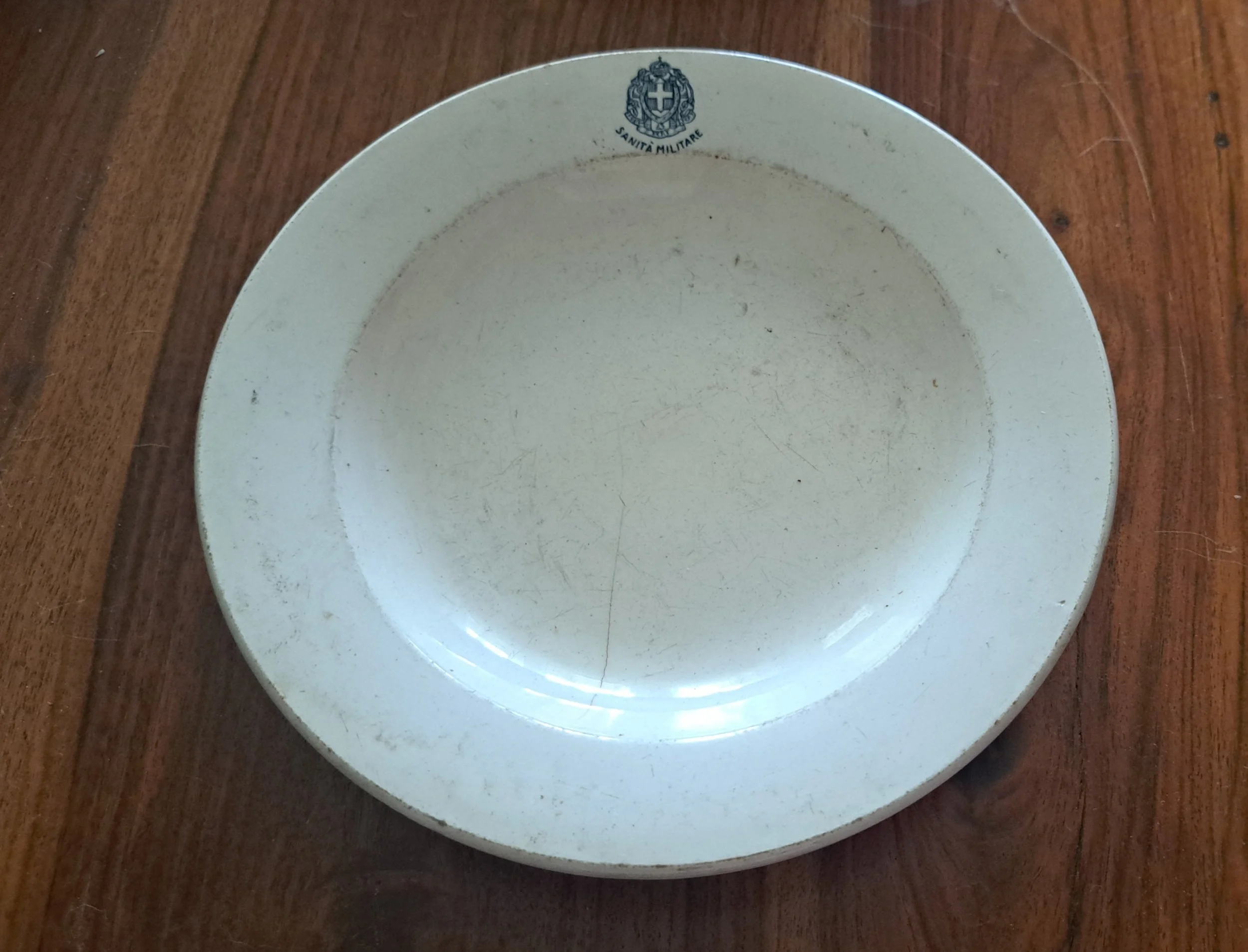
What interested me was not really the plate itself, at least not at first, but the two words printed beneath the old Italian royal crest:
SANITÀ MILITARE.
An Italian military hospital plate. In western Hungary.
Objects sometimes begin to become interesting precisely when they appear to be in the wrong place.
The crest on the front is the shield of the House of Savoy, surrounded by the collar of the Order of the Annunziata. It tells us that the plate belonged to the medical service of the Regio Esercito, the Italian royal army, and that it must date from before 1946, when the Italian monarchy ended.
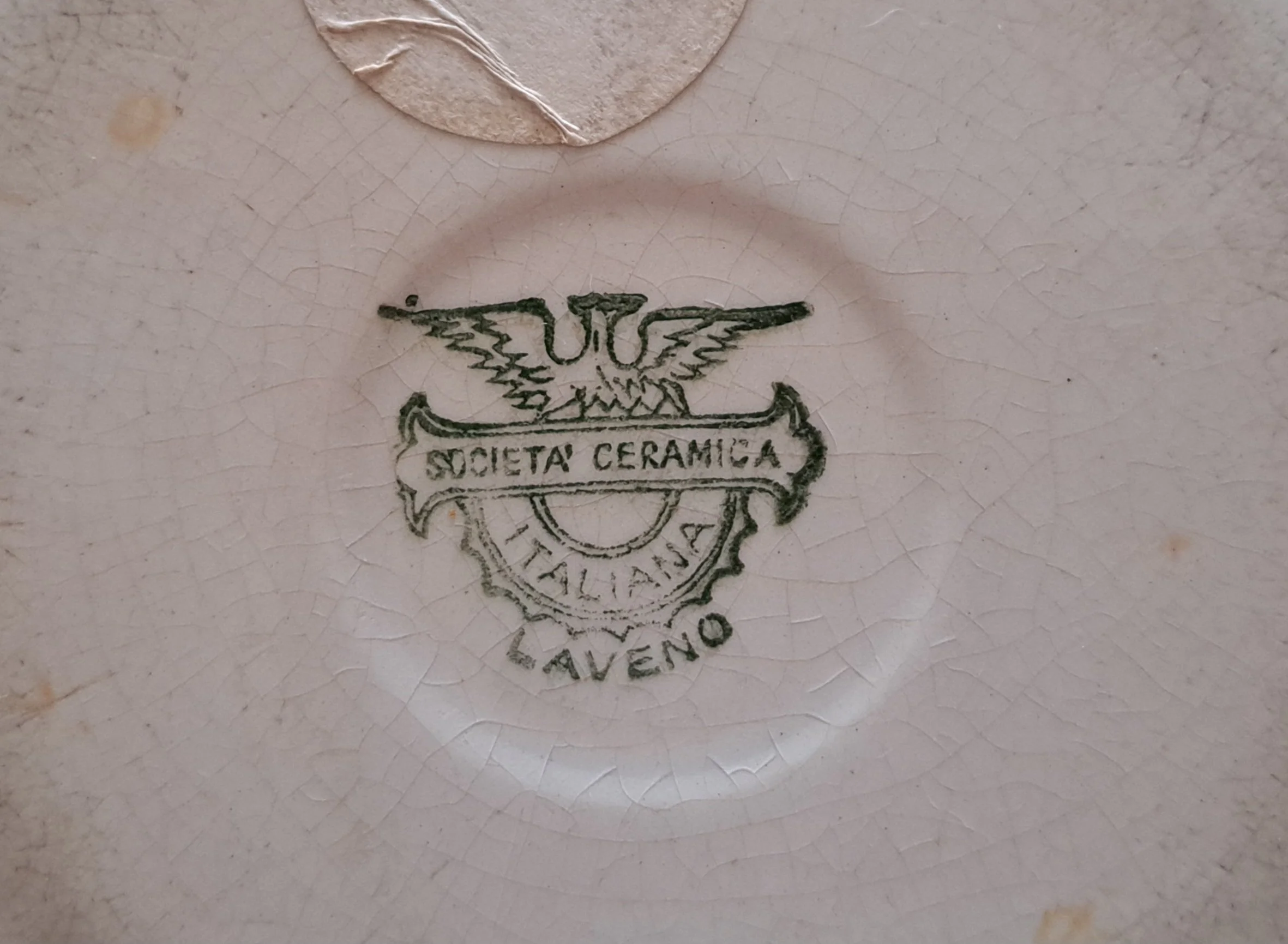
Turn it over and there is another clue: the green eagle and scroll of Società Ceramica Italiana, Laveno, one of Italy's major ceramics manufacturers on Lake Maggiore.
Those are the facts.
They tell us where the plate was made, who it was made for and, approximately, when it belonged.
They do not explain how it travelled from an Italian military hospital to Szentgotthárd.
For that, there is a story.
The man in the antique shop told me that the plate was found in a box of personal items in Szentgothárd
Maybe had belonged to a Hungarian soldier named László.
During the First World War, he had apparently been wounded, captured by the Italians and taken to a military hospital.
When he eventually returned home, two hospital plates somehow returned with him.
Can I prove it?
No.
But it is not an implausible story.
After Italy entered the war in 1915, enormous numbers of Austro-Hungarian soldiers fought and were captured along the Isonzo and Alpine fronts. Hungarian prisoners who were wounded could indeed find themselves inside the Italian military medical system, eating from exactly this sort of standard-issue crockery.
Perhaps László ate from this plate while recovering.
Perhaps he took it when he was released.
Perhaps somebody else brought it back and, decades later, the story attached itself to the wrong object.
There is no way to know.
And perhaps that is part of why I like it.
A plate is among the most ordinary objects imaginable. It is made to be used, washed, stacked and used again. Nobody was thinking about history while eating soup from it.
Now the glaze is crazed with age. Small rust-coloured marks have settled into the surface. The edge is worn. Somewhere between an Italian factory, a military hospital, a war, a Hungarian soldier and an antique shop in Szentgotthárd, an everyday object survived long enough to become a small mystery.
I bought the two plates not because I believe every word of the story.
Because there is just enough truth around it to make me wonder.
And sometimes that is all an object needs.
If anyone knows more about Italian Sanità Militare tableware, military hospitals treating Austro-Hungarian prisoners, or the dating of the Laveno mark, I would be very interested to hear from you.
THE OBJECT
Probable date: 1910-1920
Origin: Italy
Maker: Società Ceramica Italiana, Laveno,
Material: Ceramic
Dimensions: 20 cm
Found: Szentgotthárd, Hungary
STATUS: COLLECTION
This object is currently not for sale.