Marco Secchi Workshops
  • Marco
  • Venice
  • Groups
  • Istria
  • Budapest
  • Slovenia
  • Prague
  • Transylvania
  • Online
  • The Cabinet
  • Contact
  • ↗ Articles

Marco Secchi Workshops

  • Marco/
  • Venice/
  • Groups/
  • Istria/
  • Budapest/
  • Slovenia/
  • Prague/
  • Transylvania/
  • Online/
  • The Cabinet/
  • Contact/
  • ↗ Articles/
DSCF5035 copy.jpg

Marco Secchi Workshops

Marco Secchi Journal

“Rambling of a Confused” is the blog of award winner photographer and visual storyteller Marco Secchi

Marco Secchi Workshops

  • Marco/
  • Venice/
  • Groups/
  • Istria/
  • Budapest/
  • Slovenia/
  • Prague/
  • Transylvania/
  • Online/
  • The Cabinet/
  • Contact/
  • ↗ Articles/
December 18, 2012

Rolleiflex Automat MX 3.5

December 18, 2012/ Marco Secchi

Rolleiflex Automat (X sync.) is a medium format TLR film camera manufactured by Franke & Heidecke, Braunschweig, Germany, and produced between 1949-51.Rolleiflex 3.5 MX-EVS
Automat (X sync.) is also known as Model Automat MX 3.5

All Rolleiflex Automat series was produced between 1937-1956. Mine is 1954.

Automat name stands to introduced automatic film counter in 1937; this counter senses the thickness of the film backing to accurately begin counting frames, obviating the need for the ruby window that forced the photographer to read the frame number off the back of the film itself. Rolleiflex TLR film cameras were most famous and the standard of news and studio photographers for decades. Many photographers still shoot with Rolleiflex TLR film cameras and black-and-white film.

Rolleiflex is the name of a long-running and diverse line of high-end cameras originally made by the German company Franke & Heidecke, and later Rollei-Werk. The "Rolleiflex" name is most commonly used to refer to Rollei's premier line of medium format twin lens reflex (TLR) cameras. (A companion line intended for amateur photographers, Rolleicord, existed for several decades.) However, a variety of TLRs and SLRs in medium format, and zone focus, and SLR 35 mm, as well as digital formats have also been produced under the Rolleiflex label. The 120 roll film Rolleiflex series is marketed primarily to professional photographers. Rolleiflex cameras have used film formats 117 (Original Rolleiflex), 120 (Standard, Automat, Letter Models, Rollei-Magic, and T model), and 127 (Baby Rolleiflex).

The Rolleiflex TLR film cameras were notable for their exceptional build quality, compact size, modest weight, superior optics, durable, simple, reliable mechanics and bright viewfinders. They were popular and widely imitated. The high-quality 8 cm focal length lenses, manufactured by Zeiss and Schneider, allowed for a smaller, lighter, more compact camera than their imitators, The highly regarded Zeiss Planar f2.8 and Schneider Xenotar lenses, both 80mm focal length and fast in comparison, are both state of the art optics. Unique to the Rolleiflex Automat and letter model cameras, the mechanical wind mechanism was robust and clever, making film loading semi-automatic and quick. This mechanism started the exposure counter automatically, auto-spaced the 12 or 24 exposures, and tensioned the shutter; all with less than one full turn of the film advance crank. This makes the Rolleiflex Automat/Letter model cameras very sought-after for shooting fast paced action, such as street photography. A wide range of accessories made this camera a system: panorama head, sun shade, parallax-corrected close-ups lenses, color correction, contrast enhancing, and special effect filters, all mounted with a quick release bayonet, as well as a quick-change tripod attachment. Some amateur and fine-art photographers still shoot Rolleiflex TLR film cameras with color transparency, color negative, or black-and-white film. The later f2.8 and f3.5 letter models (Planar or Xenotar lens) are highly sought after in the used market, and command the greatest price. Rolleiflex TLRs are still manufactured in Germany by DHW Fototechnik.Historically there were five focal length cameras available including 5.5 cm Rollei-Wide, 6.0 cm Baby Rollei, 7.5 cm (f:3.5), 8.0 cm (f2.8), and 13.5 cm (f:4 Zeiss Sonnar) Tele-Rolleiflex. Although all Rolleflex cameras can be fine user cameras, there is also an active market for many Rolleiflex models as collectables, and this adds (greatly in some models) to the end price paid, particularly in Japan

December 18, 2012/ Marco Secchi/ Comment
My Gear
Braunschweig, Germany, Rollei, Rolleiflex, Rolleiflex TLR, Single-lens reflex camera, Toll-like receptor, Twin-lens reflex camera

Marco Secchi

Fine art, commercial and editorial Photographer | Director of Photography | Digital Content Creator | Photography Consultant | Innovation Leader |

  • My Fuji Travel Kit
  • On the trail of Tintoretto
  • Marco/
  • Venice/
  • Groups/
  • Istria/
  • Budapest/
  • Slovenia/
  • Prague/
  • Transylvania/
  • Online/
  • The Cabinet/
  • Contact/
  • ↗ Articles/

Marco Secchi Workshops

One of the BestTours on Tripadvisor. Photo Workshop. Have you ever walked on the streets and saw a moment that you wanted to capture, but you were too scared to take the photograph? Do you want to become more confident shooting in the streets and learn how to better interact with your subjects? 

Info, News and updates about Venice. Where to stay, What is happening, Where to Eat….and a lot more

No results found

Get Updates from Me!


My Instagram Feed

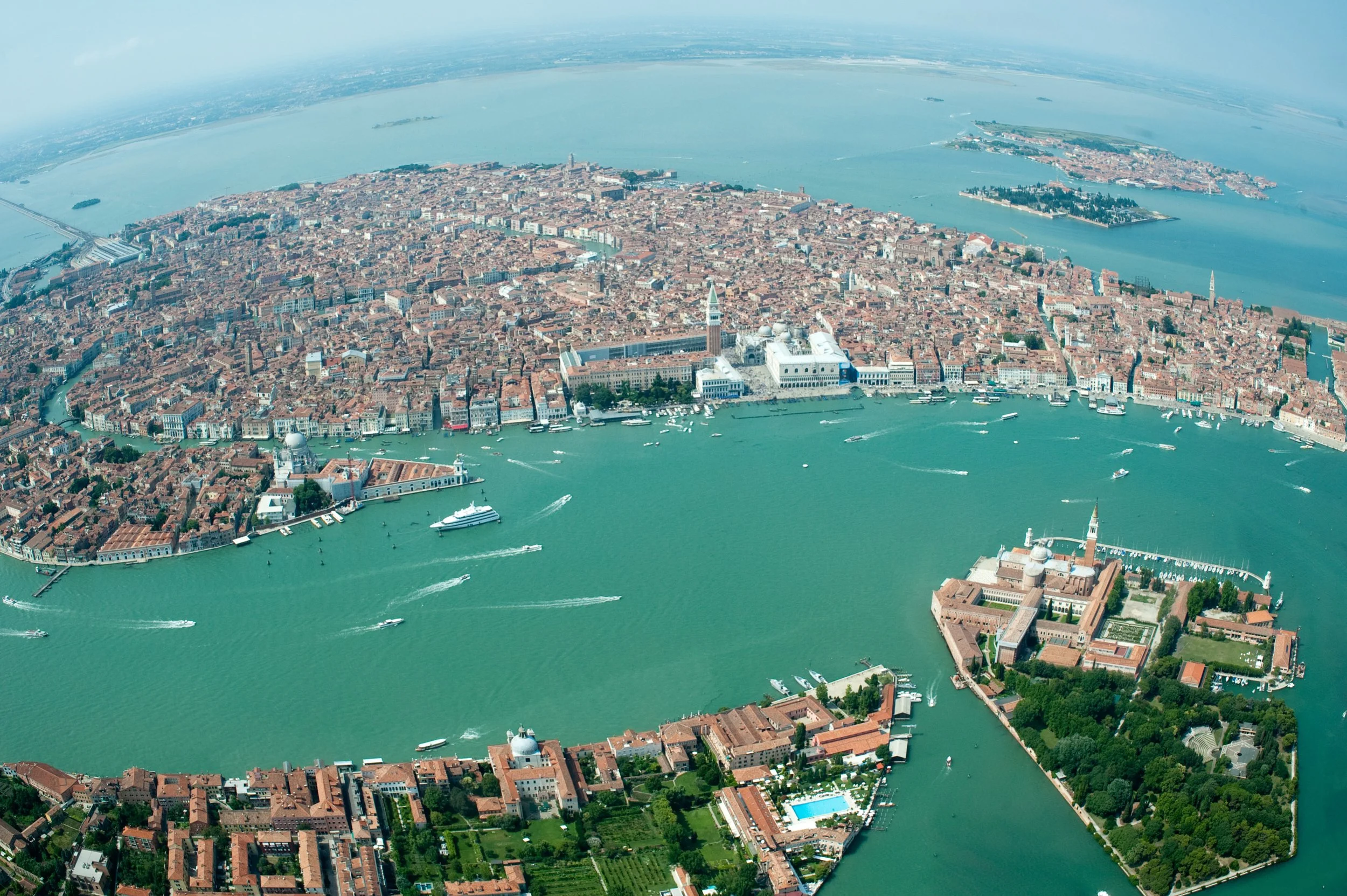
Venice from a seaplane becomes a different city.

At street level, we experience it in fragments: a narrow passage, a bridge, a sudden opening onto the water. From above, those fragments become a structure. San Marco, San Giorgio Maggiore, the lagoon
Venice from a seaplane becomes a different city. At street level, we experience it in fragments: a narrow passage, a bridge, a sudden opening onto the water. From above, those fragments become a structure. San Marco, San Giorgio Maggiore, the lagoon and the distant islands all settle into a pattern of shapes, distances and connections. It is a useful reminder that photography is not only about finding the subject. It is also about deciding from what distance the subject begins to make sense. I cannot promise you a seaplane during my Venice photography workshops, but we explore that same question at street level: how to move beyond the familiar view, simplify a complicated scene and make photographs with a clear point of view. If you would like to photograph Venice with me, you can find workshop details through the link in my bio. #VenicePhotography #AerialPhotography #PhotographyWorkshop #visualstorytelling
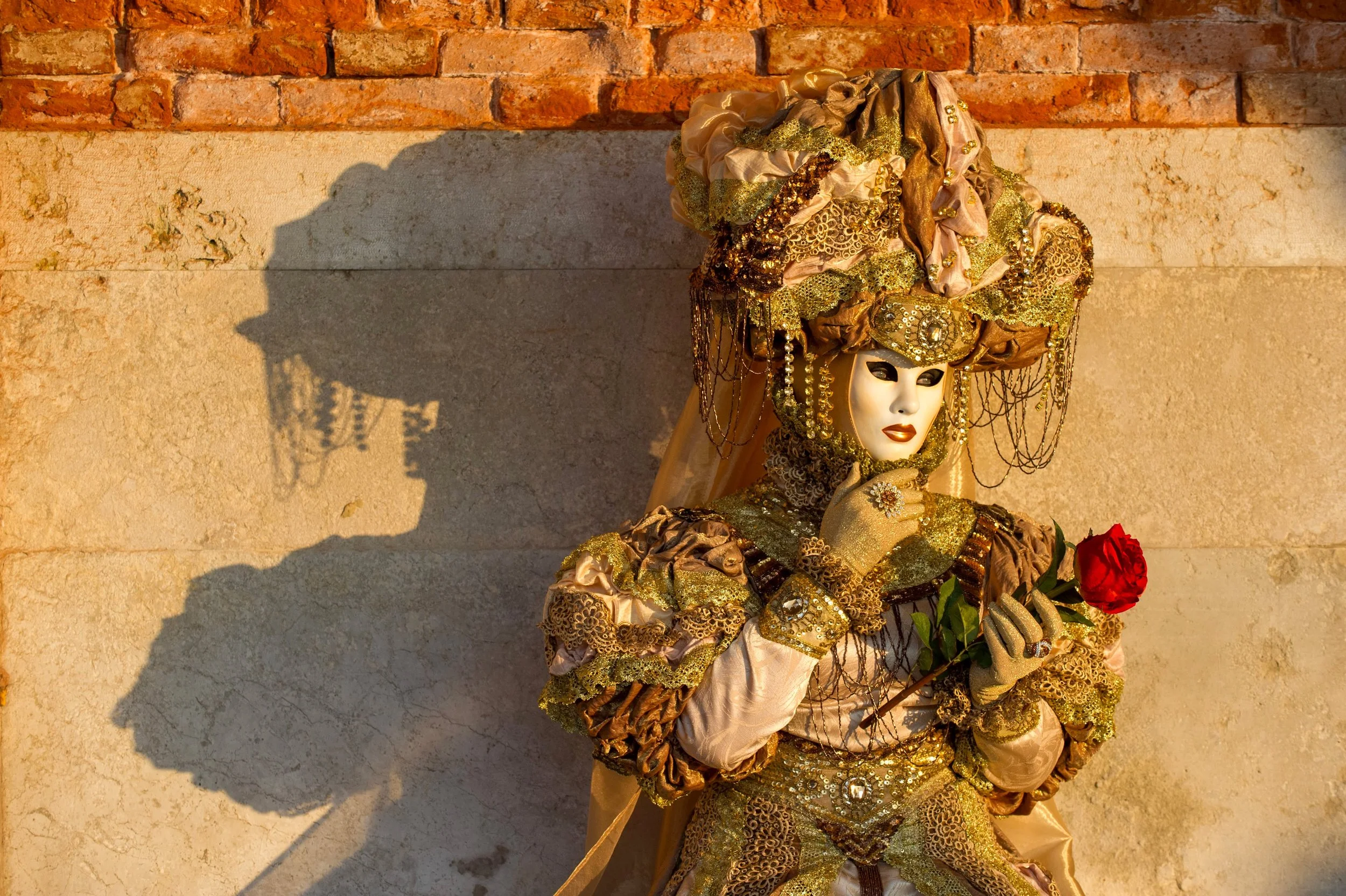
Carnival in Venice is not only masks, costume and spectacle. The photographs that stay with me are usually made in the quieter spaces around it: an early crossing, a figure waiting in soft fog, the moment a costume becomes part of an old wall or a na
Carnival in Venice is not only masks, costume and spectacle. The photographs that stay with me are usually made in the quieter spaces around it: an early crossing, a figure waiting in soft fog, the moment a costume becomes part of an old wall or a narrow street. It is a remarkable few days to photograph, but it rewards patience much more than rushing from one famous location to another. The light changes quickly, the crowds arrive early, and the best pictures are often found just outside the obvious frame. A few photographs from past Carnivals. I will be running a small number of Venice Carnival workshops next year, working in very small groups and concentrating on timing, light, atmosphere and finding your own way of seeing the city. If you're interested, send me a message or check the link in my bio. #venicecarnival #carnevaledivenezia #venicephotography #veniceitaly #venicephotographer #carnivalphotography
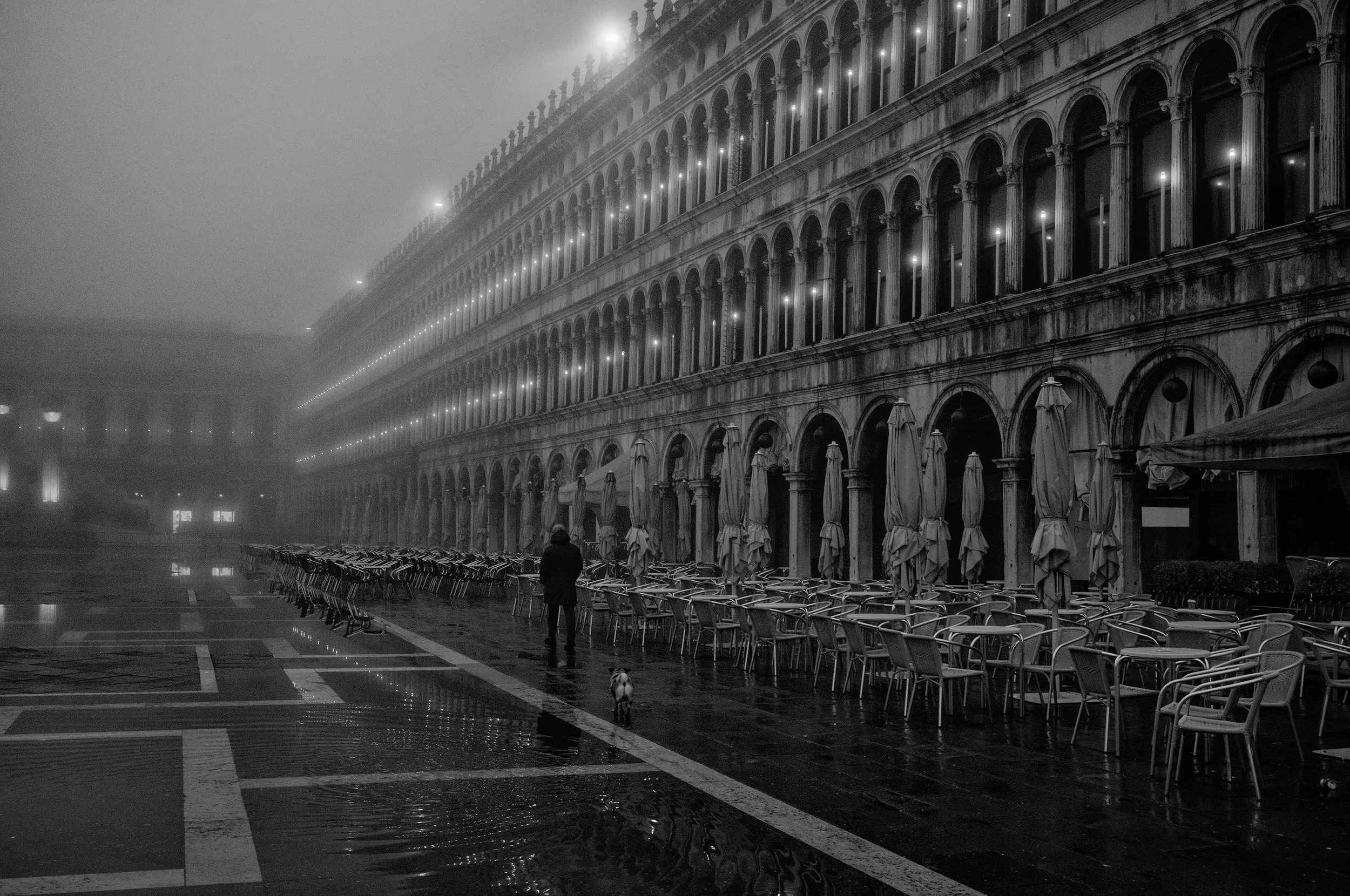
Venice was barely awake. Fog had swallowed the far end of Piazza San Marco, the cafés were still closed, and their empty chairs waited beneath folded umbrellas. Then a solitary walker and a small dog entered the frame, giving scale to the sile
Venice was barely awake. Fog had swallowed the far end of Piazza San Marco, the cafés were still closed, and their empty chairs waited beneath folded umbrellas. Then a solitary walker and a small dog entered the frame, giving scale to the silence. Winter is when Venice often speaks most quietly. Familiar landmarks recede and the photograph becomes about rhythm, distance and the few details the mist allows us to keep. Photographed with the Leica M11. This slower way of seeing is part of what we explore during my Venice photography workshops. If you would like to photograph the city beyond its familiar views, send me a DM for details and availability. #VenicePhotography #LeicaM11 #LeicaPhotography #StreetPhotography #photographyworkshop
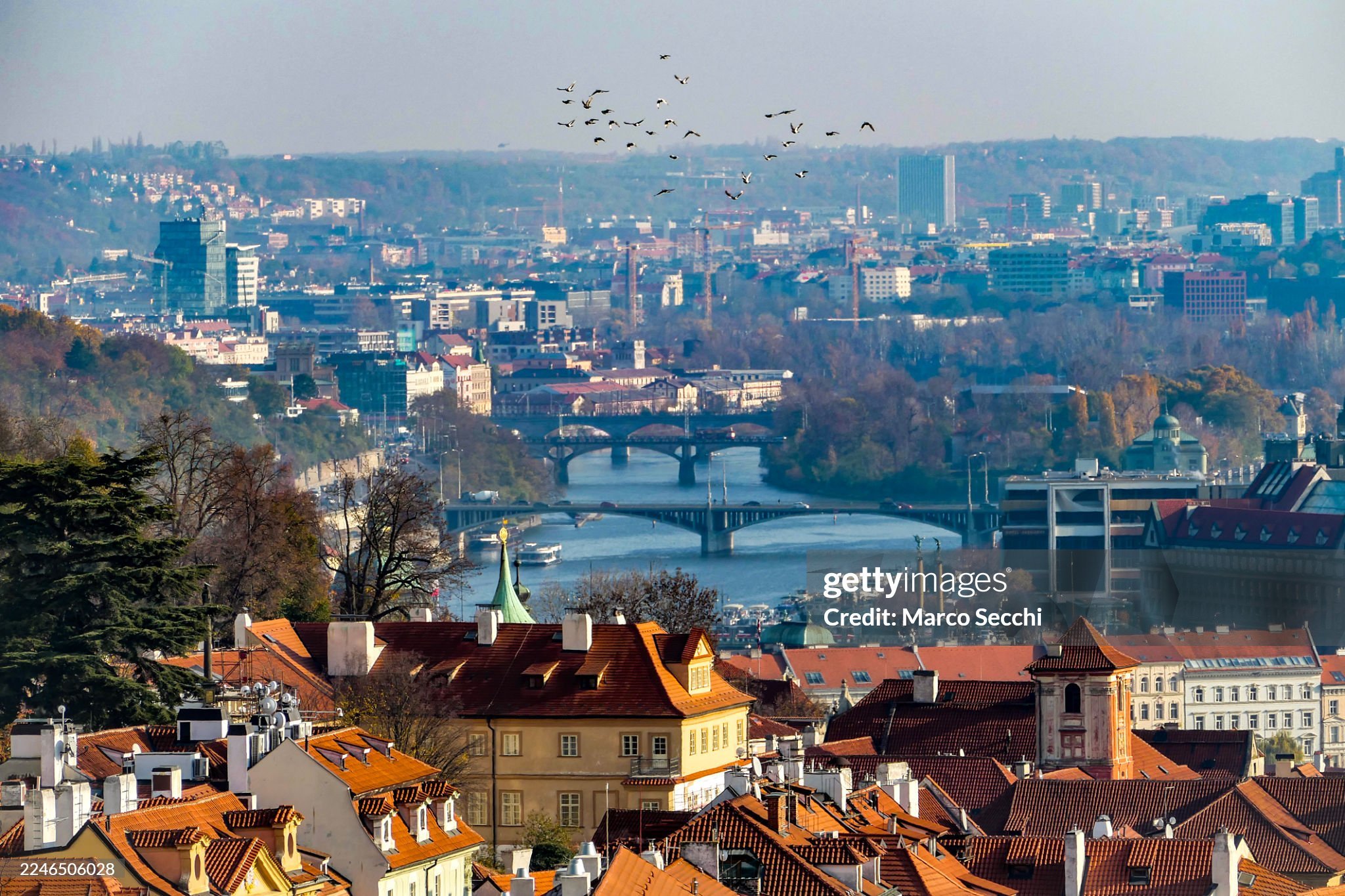
Prague unfolding in layers: terracotta roofs in the foreground, the Vltava carrying the eye through the city, bridges marking the distance, and a sudden flight of birds bringing movement to the open sky.

This is what I enjoy about photographing a ci
Prague unfolding in layers: terracotta roofs in the foreground, the Vltava carrying the eye through the city, bridges marking the distance, and a sudden flight of birds bringing movement to the open sky. This is what I enjoy about photographing a city from above. The viewpoint gives you scale, but the photograph still depends on small relationships: the repetition of rooftops, the curve of the river, the separation between foreground and distance, and the brief moment when something unexpected enters the frame. The birds were there for only a few seconds, but they changed the photograph completely. Good travel photography is rarely about recording everything in front of you. It is about recognising the elements that matter and arranging them into a coherent frame. This is also the approach at the heart of my photography workshops in Venice, Budapest and Milan. We work on observation, composition and visual storytelling, learning how to move beyond attractive views and make photographs with structure, atmosphere and a clear point of view. Workshop details are available through the link in my bio. #prague #photographyworkshop #leica @leicaboutiqueprague #czechrepublic🇨🇿
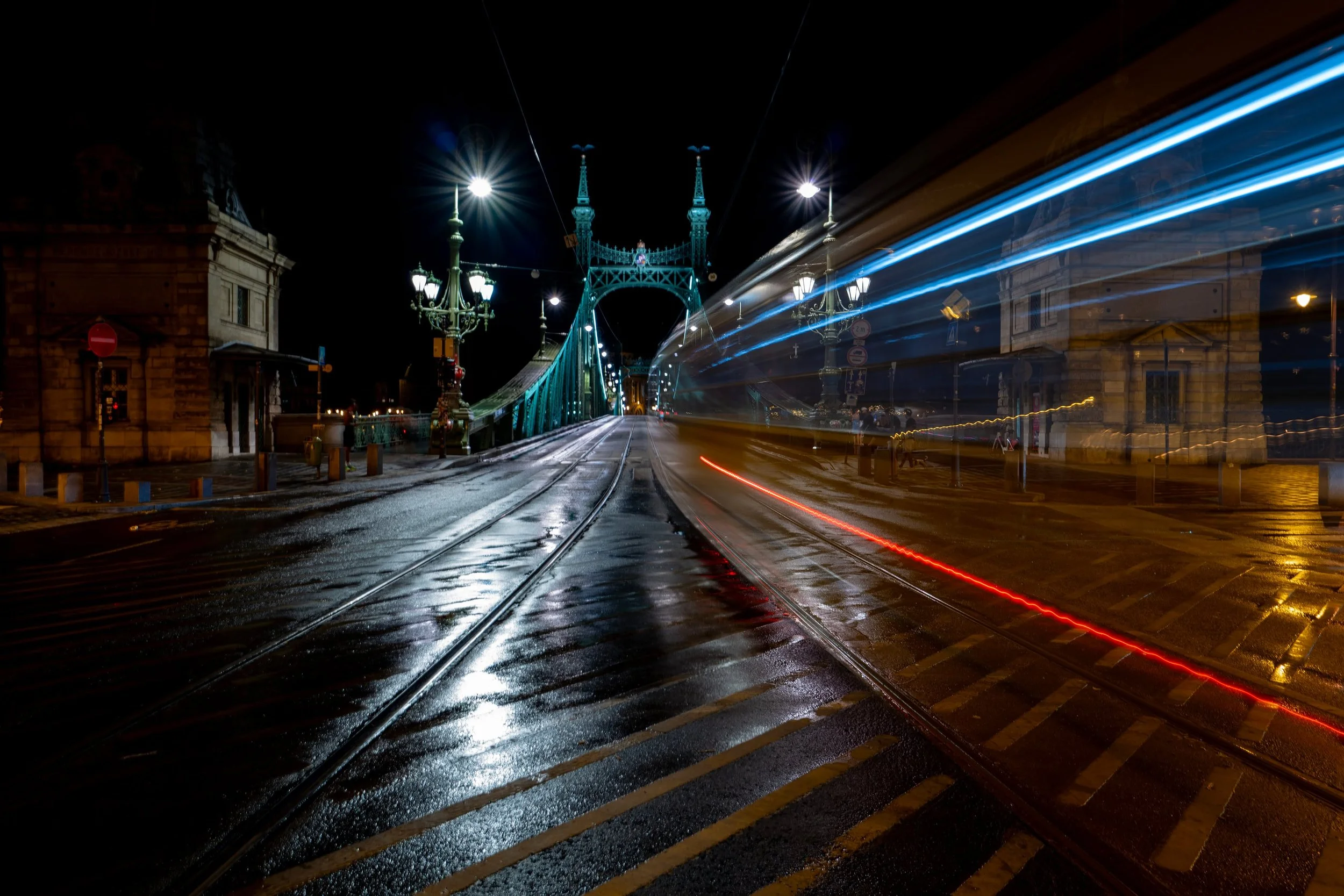
Budapest after rain, when the city seems to hold the light a little longer. 

A tram crosses Liberty Bridge, dissolving into blue and red streaks as the wet rails pull the eye toward Buda.

For a few seconds, the traffic, the river and the night fall
Budapest after rain, when the city seems to hold the light a little longer. A tram crosses Liberty Bridge, dissolving into blue and red streaks as the wet rails pull the eye toward Buda. For a few seconds, the traffic, the river and the night fall into the same rhythm. The tram disappears, but its colour remains suspended across the frame, turning an ordinary crossing into something close to magic. Photographed with #Leica in #Budapest, #Hungary.
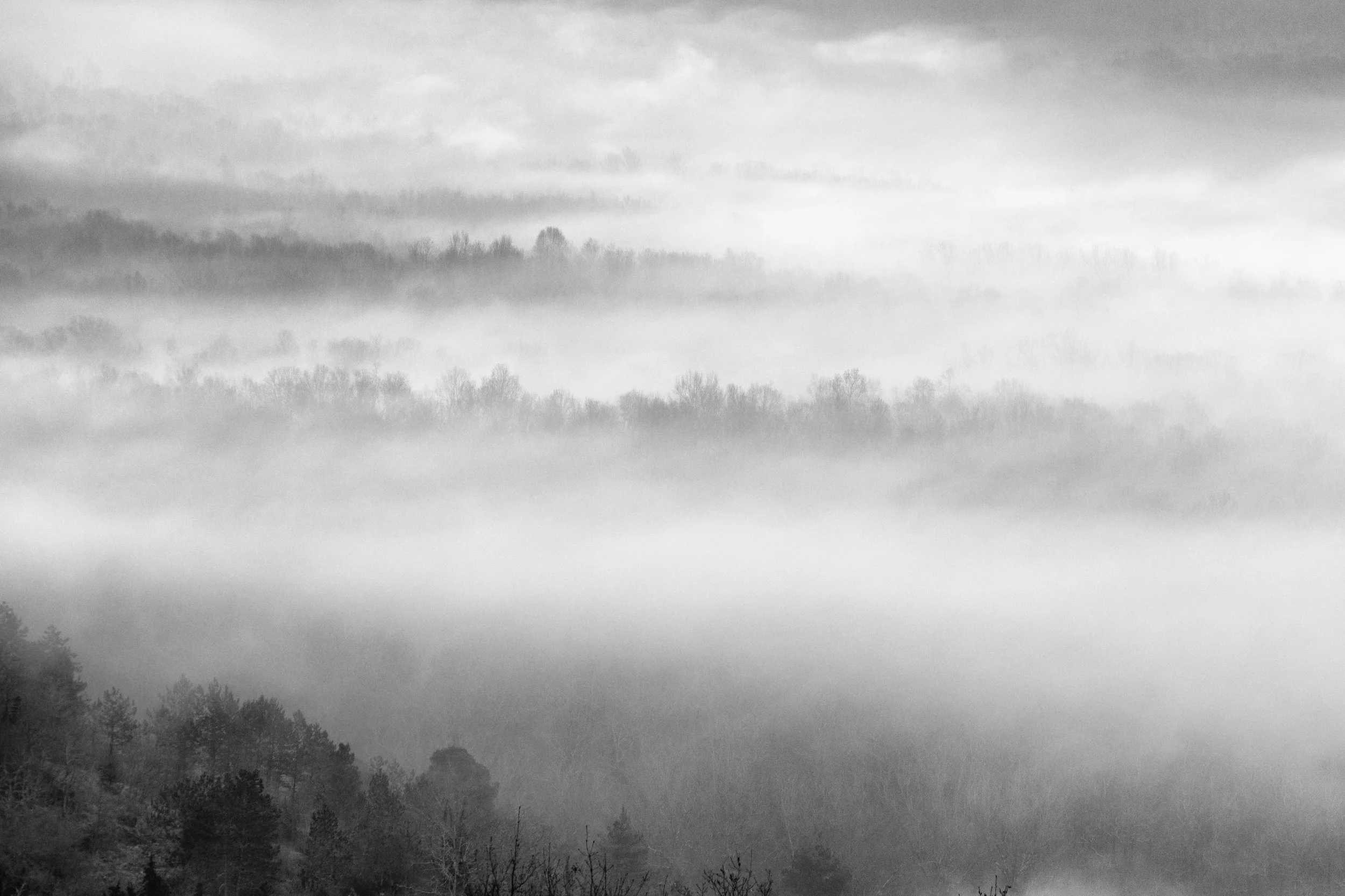
Motovun and Istria still on my mind, fog in the valley, cypress trees waiting for light.

Some mornings stay with you long after you've left them.

@istr__a_more 

#istria #croazia #photography #workshops
Motovun and Istria still on my mind, fog in the valley, cypress trees waiting for light. Some mornings stay with you long after you've left them. @istr__a_more #istria #croazia #photography #workshops

Made with ❤️ in Venice and Budapest

Images Copyright by Marco Secchi